
How Light Painting Works for Commercial Photography
Behind the scenes of a real project, start to finish.
A single camera exposure almost never captures a building the way you actually want it to look. The sky goes dark too fast. The facade is uneven because the ambient light wasn’t planned for photography. Some windows blow out while other areas go completely black. What your eye sees standing in front of a well-lit property and what a camera captures in one shot are two different things.
Light painting is how you close that gap.
What light painting actually means
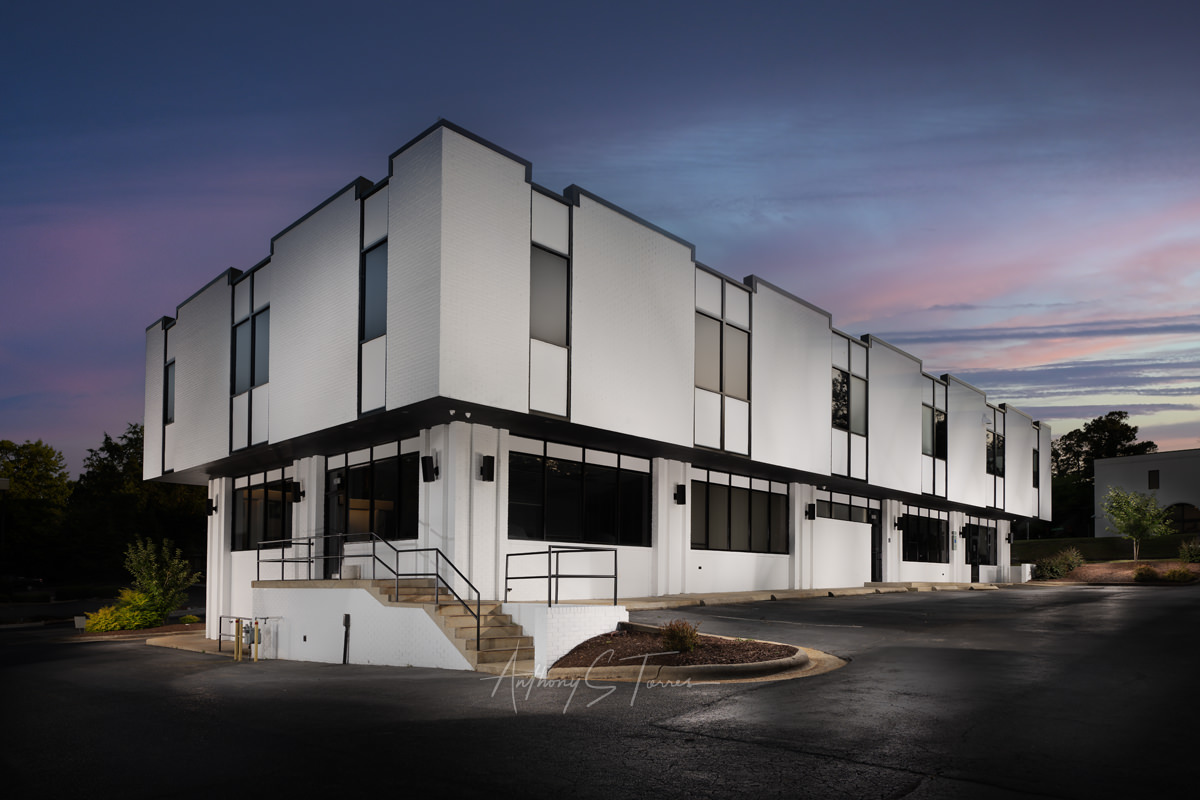
The idea is simple even if the execution takes some planning. Instead of lighting the subject all at once and taking one shot, you take dozens of exposures of the same subject, each time lighting a different section of it with a portable continuous light. Between shots you move the light to a new position. The camera stays on a tripod throughout so every frame lines up perfectly.
For a building, that might mean walking along each floor with the light on a pole, illuminating sections of the facade one at a time. For food or a product, you’re doing the same thing at a much smaller scale, moving the light around the subject to fill in exactly what you want lit without casting unwanted shadows from the wrong angle.
Once you have all your exposures, you bring them into Photoshop and composite only the pieces you want from each frame. The best-lit section of the roofline from shot 12. The parking lot from shot 4 where the light hit it right. The reflection in the windows from shot 31. You build the final image out of the best version of each part, which is something no single exposure can give you.
See it from start to finish
This video shows a full light painting project on an apartment building for a property management client. It’s a timelapse of the actual process, exposure by exposure, followed by the compositing process in Photoshop including the distortion correction you need to straighten a building that was shot from an angle.
The gear on this project: a Nikon D810 for the exposures, a CamRanger to trigger the shutter remotely from wherever I was standing with the light (so I wasn’t running back to the camera between every shot), and a Lowel GL-1 as the light source. The GL-1 is small, runs on AC or battery, and puts out a consistent color temperature that makes compositing predictable.
It works on more than buildings
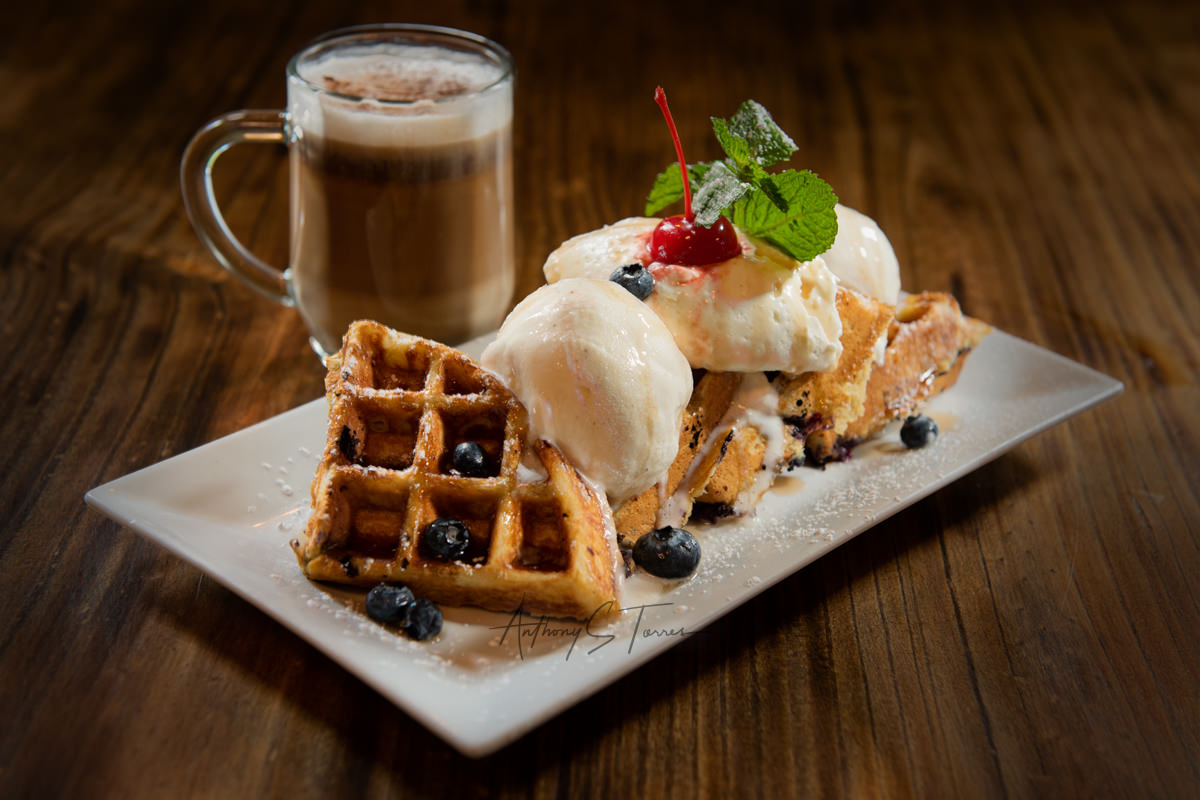
The technique is the same whether the subject is ten stories tall or sitting on a table. Food photography is a good example. A plate of food photographed with a single light source almost always has areas that are too bright or too flat. Light paint it instead and you can pull out texture in the crust, get the right sheen on a sauce, and control exactly what the viewer’s eye goes to first. Same principle, completely different scale.
Products work the same way. Anything where you need precise control over how light falls across a three-dimensional subject is a candidate for this approach.
When it makes sense for your project
Light painting isn’t the answer to every commercial job. It takes more time on location and more time in post than a standard setup. But if you’re trying to show a property at its best, create food or product images that actually make people stop scrolling, or produce something that looks more controlled and intentional than what you’d get from a single setup, it’s worth it.
If you have a project that might be a good fit, reach out and we can talk through what the approach would look like for your specific situation.
Have a project that needs something different?
Reserve a consultation and let’s figure out the right approach for what you’re trying to create.
Reserve Your Consultation