
What to Wear for Your Headshot
Look like the person they expected to meet.
Before we talk about what to wear, it’s worth talking about what a headshot is actually supposed to do.
Think of it like business online dating. Before someone meets you for coffee, takes a call with you, or walks into a room to hear you speak, they’ve already looked you up. They’ve formed an impression. The job of a good headshot is to make that first in-person moment feel like a confirmation, not a surprise. When someone finally sees you and thinks “that’s exactly who I expected,” there’s instant comfort and trust. When they don’t recognize you, there’s a flicker of something else.
That’s the frame for everything below. The goal isn’t to look like the best possible version of yourself on your best possible day. It’s to look like the real you, at your most polished.
Match how you actually show up
One of the first things I ask clients is how people see them when they go to meet them in person. Not on their best day, not at an event, just a normal Tuesday where there’s something on the line. That’s usually the right starting point.
A headshot should look like you, not a costume version of a professional. If you work in a creative field and dress casually, dress that way. If you’re in finance and always in a jacket, wear the jacket. The image needs to match who actually walks into rooms.
Think about where the photo will live
Not every headshot gets used the same way, and that’s worth thinking through before you pick your outfits. LinkedIn calls for something a little more polished and professional. A Facebook business page or a speaking engagement bio can carry something slightly warmer and more approachable. They’re not radically different looks, but the nuance matters when you’re choosing between two options you brought with you.
If you know you’ll be using the image across multiple contexts, bring variety. A jacket and without. A crisper neckline and a more relaxed one. We can cover more ground in the same session.
Fit over formality
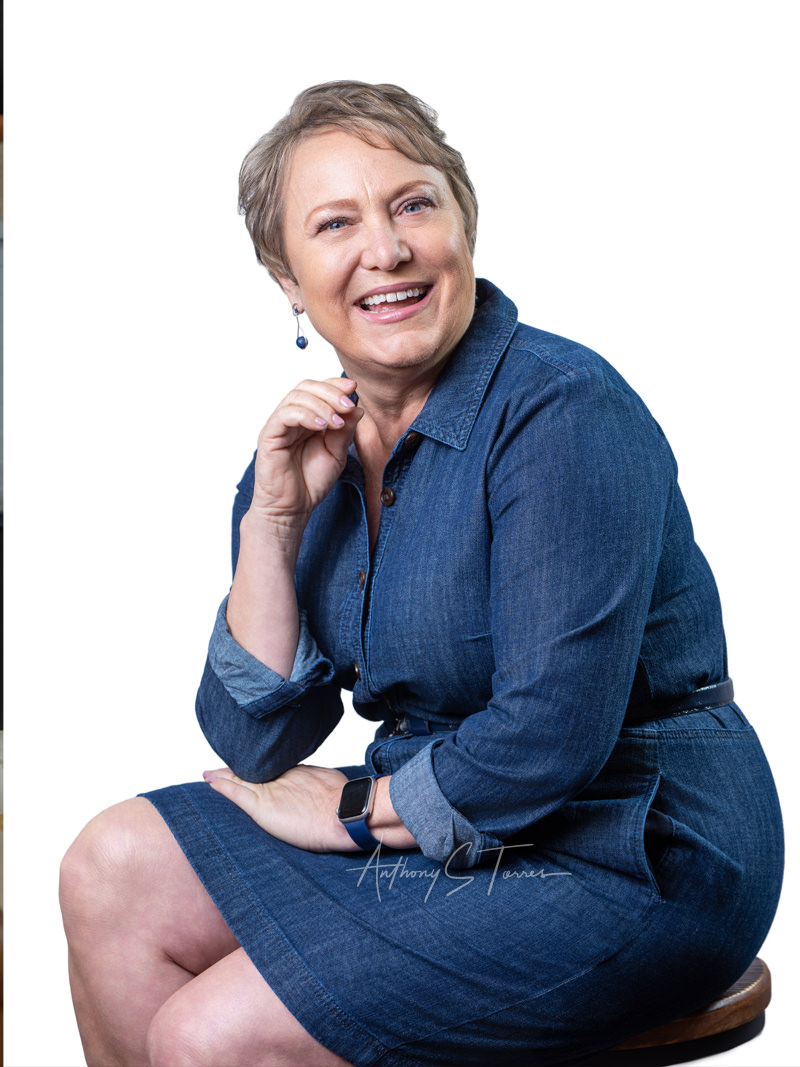
Form-fitting and figure-hugging reads slimmer on camera than you’d expect. A well-fitted casual shirt photographs better than a suit jacket that doesn’t sit right. If something pulls, bunches, or gaps, it shows in a still image in a way that movement hides in real life.
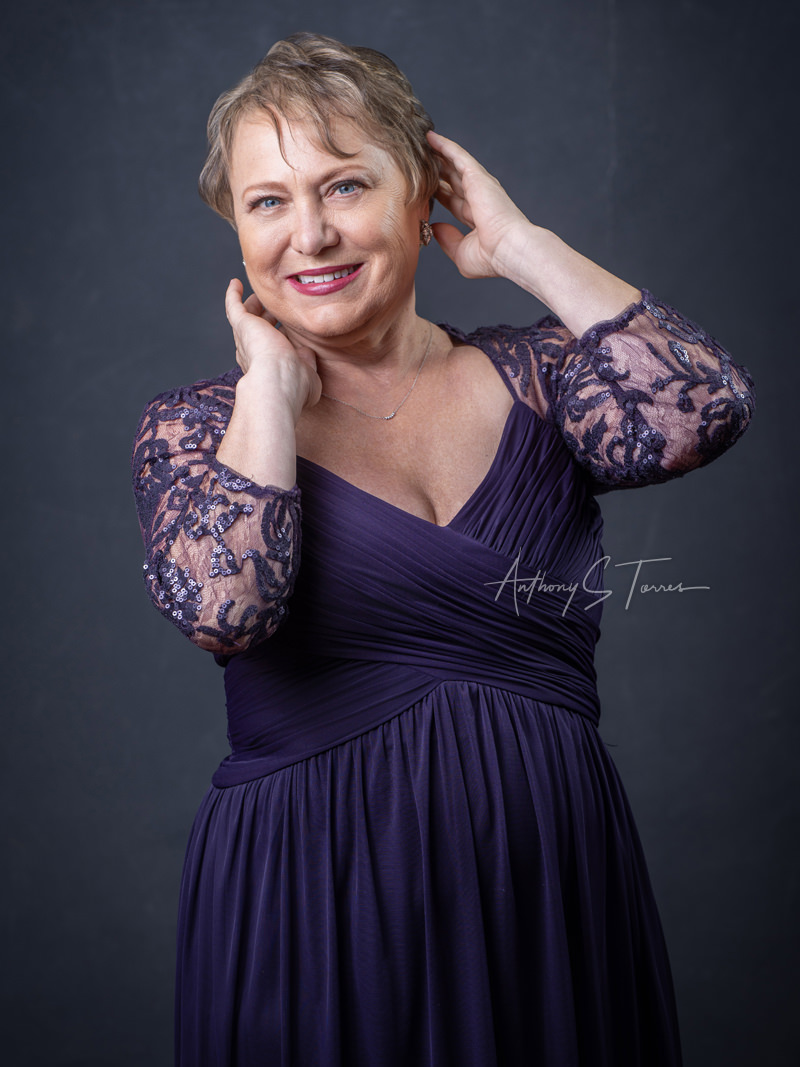
On sleeves: avoid cap sleeves. Sleeveless works well on toned arms. Three-quarter sleeves are universally flattering and slimming, a safe choice for almost anyone.
What the camera sees that your eye misses
Patterns are risky. Thin stripes, busy prints, and herringbone weaves can create a moiré effect, a distracting shimmer where the fabric interferes with the sensor. Small patterns you’d never notice in person can dominate an image. When in doubt, go solid.
Textures add something patterns take away. Lace, ruffles, and ruching create visual interest without the moiré problem. A textured fabric reads richer on camera than a flat one at the same color.
Bright white is harder than you think. White near your face can catch too much light and pull the eye away from where it should be. Ivory, cream, and light grey read cleaner.
Colors and variety
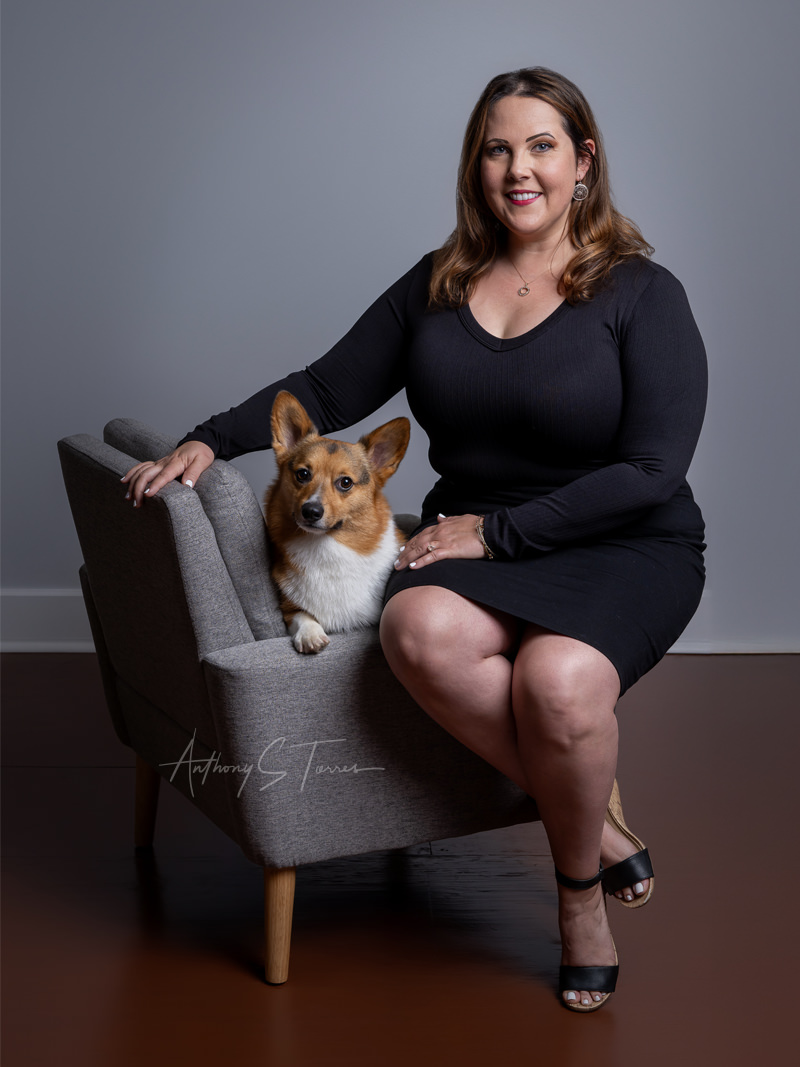
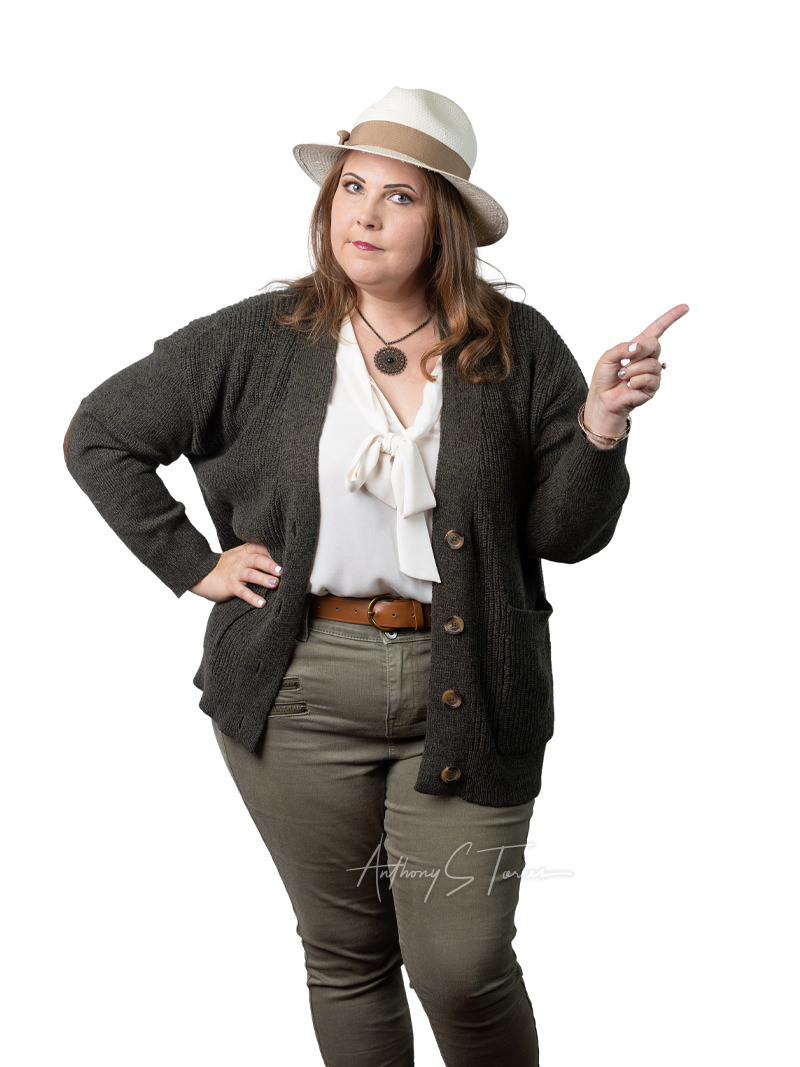
Bring a range: something light, something dark, a pop of color that works with your eyes. Navy, charcoal, forest green, burgundy, and dusty blue tend to photograph well and read as professional without competing with your face. Rich, saturated colors can work if they’re part of your brand or personal style.
Look for variety in necklines too. A v-neck, a crew, a collared option gives you different looks to work with rather than three versions of the same silhouette.
Bring options, press everything
Aim for two or three choices. We’ll look at what you’ve brought and decide together once we can see the lighting setup. What you thought was your backup often ends up being the right call.
Clean and press everything before you arrive. Wrinkles that look minor in person read clearly in a still image. And avoid wearing something new that you haven’t moved around in. First-day stiffness shows.
Beauty prep: don’t try anything new
This is the one people underestimate. Stick to your usual beauty routine in the week before your session. No spray tan. No radical hair color change. No facials, fillers, or Botox within a week of your appointment. Any of those can still be showing on camera.
If your roots need touching up, do it. Nails: French, buff, or nude. Your hands are in more frames than you’d expect, especially in personal branding sessions.
Hair: if you’re planning a cut, do it a few days before so it settles, not the morning of. The goal across all of it is the same. When someone who knows you sees the image, it looks exactly like you.
Ready to get a headshot that actually looks like you?
Reserve a consultation and we’ll talk through what the session looks like before you commit to anything.
Reserve Your Consultation